|
As far as I've found, WRL/Globe was the only company to ever offer a commercial transmitter that operated only DSB without SSB as well. The Meteor SB-175 is the successor to the earlier DSB-100, and is a very compact and simple 6 tube, 10 pound, AM/CW/DSB transmitter. It uses a pair of 6DQ6B finals as high-level balanced modulators for DSB, or in parallel with screen modulation for AM. Crystals or an external VFO (I'm using the Hallicrafters HA-5) is required, as well as a suitable power supply (mine is a homebrew clone of the WRL PSA-63). The Meteor has been getting good reports on both DSB and AM, and for $99, was the cheapest way to get a "sideband" signal on the air in the early 60s. I remember seeing one in use on 4.5 mhz at a Civil Air Patrol station in the mid-sixties, but I suspect they were using it on AM rather than DSB.
I've paired the Meteor up with the Mosley CM-1 receiver, a one-hit wonder from the famous St. Louis antenna maker. The CM-1 is a cool little receiver - it's basically a 75 meter receiver with a built-in crystal-controlled converter for 40-10 meters. It did all this, including a product detector, in a compact box using only five 6AW8A tubes, that sold for a price of $179 back in the early 60s. The fact that Mosley is known for its antennas but not for receivers pretty much says it all. Oh, by the way, that is the actual mating speaker on top of the CM-1. I found it in a guy's junk box at a hamfest for $2.00.
Both stations would be historically correct circa 1962. I may be scraping the bottom of the sideband barrel but it's been a lot of fun getting these two space-age stations on the air. |
|
|
The B&W 6100 is a very nice transmitter, it must have just been too expensive when first introduced as only 200 are said to have been sold. It's a filter type rig that uses a crystal synthesizer instead of a
VFO, where the 100's and 10's of khz are switch-selected, and the 1's are produced by a
VXO. The 6100 runs a pair of 6146 finals and covers 80-10 meters and is quite stable, even though it's not completely drift-free. I've got it paired up with the hard-to-beat Drake 2B and the Gonset GSB-201, which runs four 811As for a kilowatt input. |
|
Cheap and Easy SSB
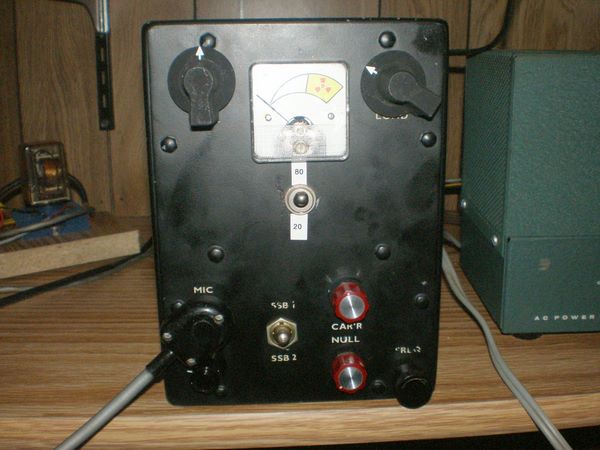
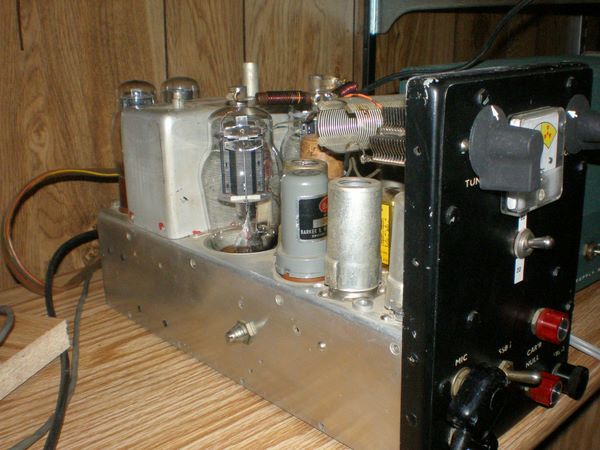
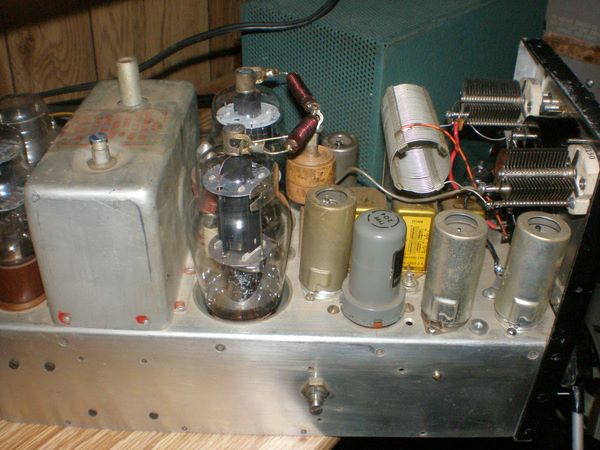
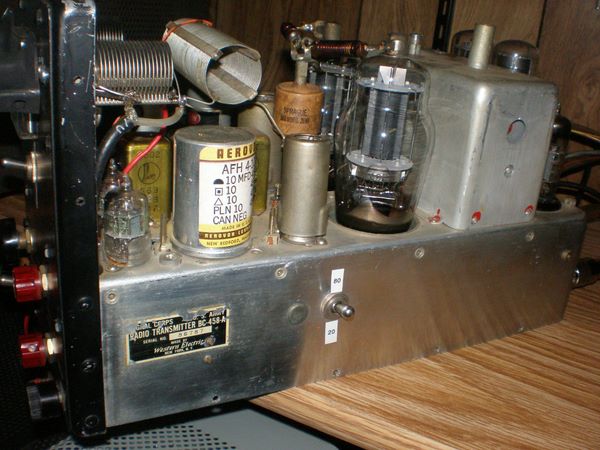
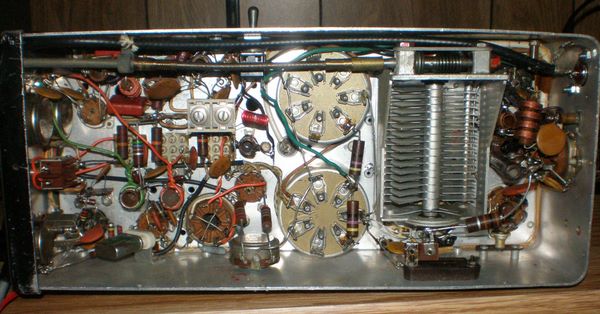
I thought I'd send some pictures of my "Cheap and Easy SSB" transmitter that I had on the net Saturday. While I'm not satisfied with the 20 meter performance, I thought it was working well enough on 75 to put on the air.
The original article by Anthony Vitale, W2EWL, appeared in the Mar. 1956 QST and there were several subsequent articles that led to an improved version that was published in several editions of the ARRL SSB Handbook. Mine's the later design, which uses a 12BY7 mixer/driver and incorporates a few other minor changes.
The basic circuit - a 9 mhz phasing exciter and 5 mhz VFO - was used by many other rigs, including the commercial transmitters built by Central Electronics, Lakeshore, and others. The attraction was the ability to get on the two most popular ham bands with SSB by selecting either the sum or difference of these two frequencies. The commercial rigs added mixing stages to reach the other bands, but this was the origin of the 5mhz VFO that carried over well into the transceiver era. W2EWL cleverly figured a way of fitting the needed circuitry onto the ubiquitous BC-456 chassis which was available then for $5 or so. He based his transmitter on the "SSB Jr" that appeared in GE Ham News in 1950, but made it much easier to build, and thanks to the 1625 finals, able to produce a usable signal (I can get close to 60 watts carrier output using an HP-23 power supply ). This low-cost design put countless hams on SSB for the first time and was even used mobile.
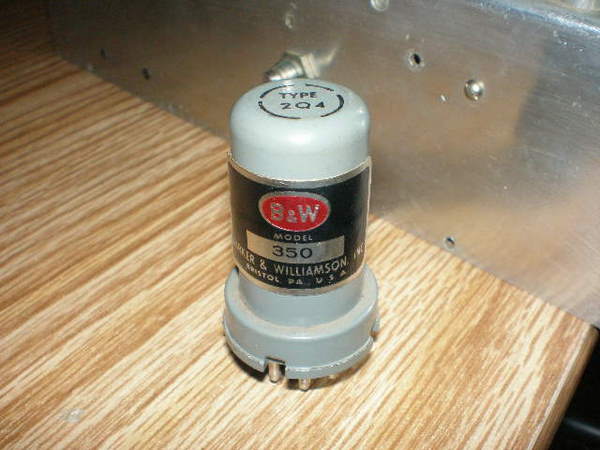
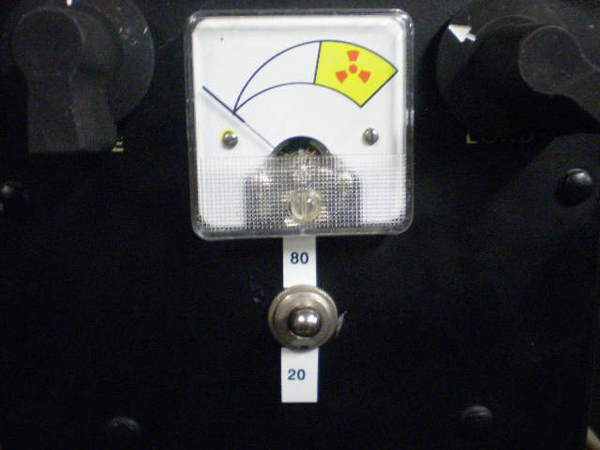
I was fortunate to find this unit mostly assembled, and only had to add some missing parts to finish it up. The meter? Well since the original builder had chopped a hole for one I dug in the junkbox for one that would fit...and this seemed perfect. (Note the absence of cracks). It's wired as a relative output meter to aid in carrier nulling. The most hard-to-find item is phase shift network - a B&W 350. This is a great way to learn how a phasing rig works and I'd love to hear from anyone who has one or is interested in building early gear like this. |
|
|
|
|
|
|
|
|
|
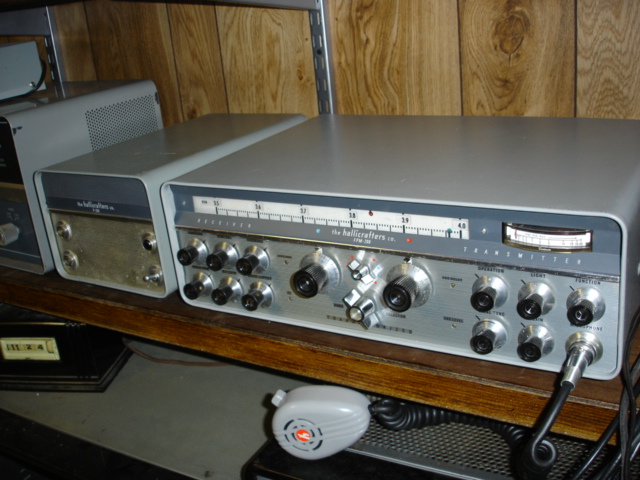
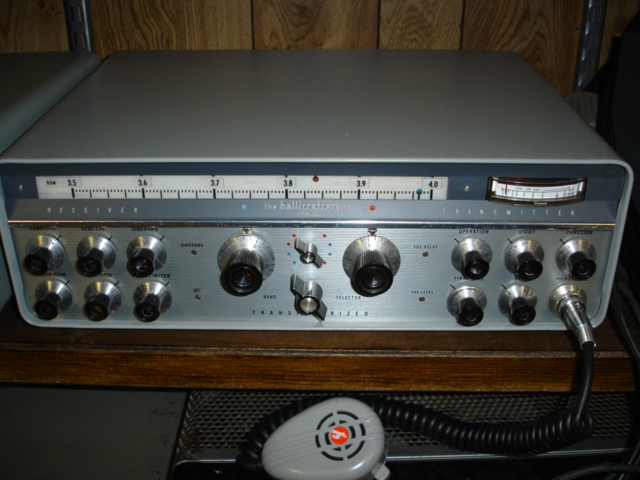
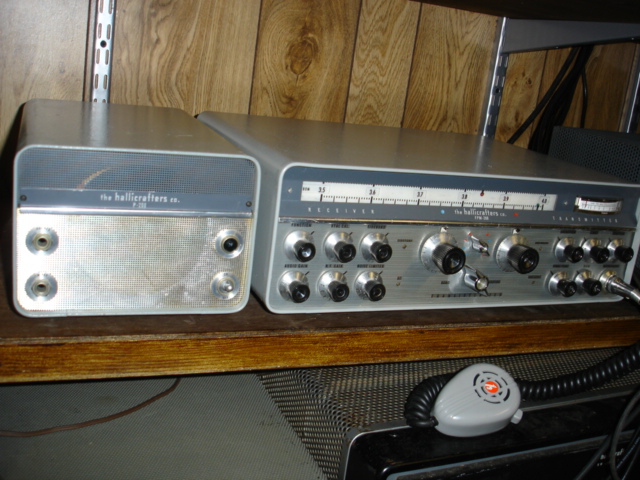
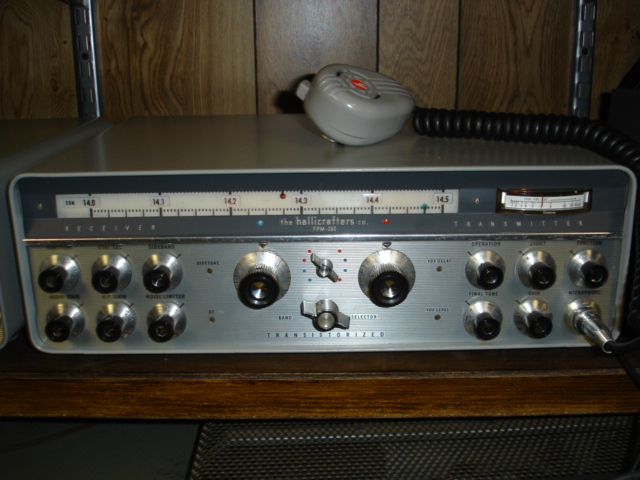
Hallicrafters FPM-200
I acquired this rare radio quite some time ago. but I was working full-time and just didn't have the time required to restore it properly, so it's mostly been a nice shelf queen. Several years after I bought it, I was able to pick up a quantity of parts and subassemblies from the original Hallicrafters production line at a Chicago-area hamfest. While the manual is very good, having spare modules was a huge help in being able to go through the entire radio and get everything working - you can imagine what a packaging challenge it presented, built around technologies that were available around the time Spunik was launched. Virtually every part of the FPM-200 except for small components is unique and custom-made for this radio. This is clearly one design project where the bean-counters did not have the last word!
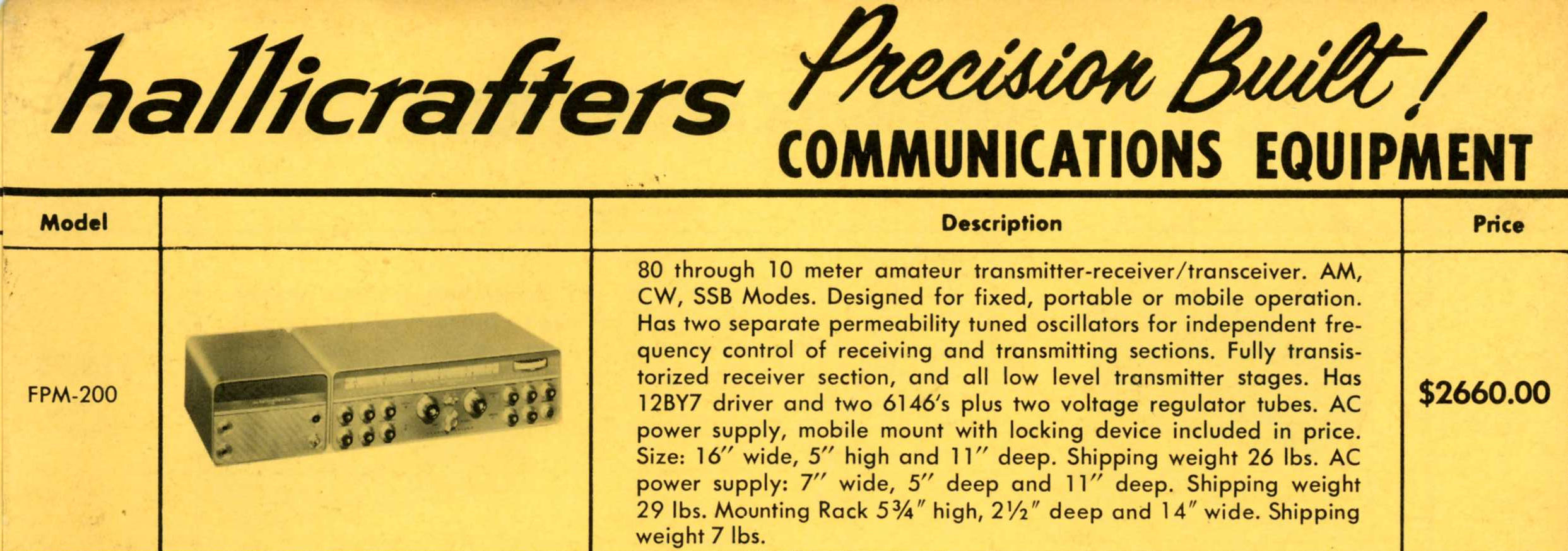
As this snippet from a Hallicrafters product summary from 1962 says, it's all solid-state except for driver, final (2x6146) and regulator tubes. What is doesn't say is that there's not a flake of silicon in the radio - all 39 transistors and dozens of diodes are germanium! Another reason having a parts stash was very handy, as some of these early devices not only fail, but undergo shifts in characteristics that require bias changes for proper operation. Still, the straightforward modular design and PC board construction makes the rig fairly easy to work on.
It may not be obvious that the transceiver requires only 12 volts DC for operation. This means there are two power converters inside the FPM-200, one that generates all the tube plate, screen, and bias voltages, and one that generates 110VAC for the cooling fan. This was back in the day when your car radio needed a vibrator to do the same job. Unlike more modern radios, these inverters don't run constantly, but are keyed when in transmit mode only, so power consumption in receive is quite low. All connections are made via a single multipin connector, and a slide-in type mobile mounting bracket was included, but I've never seen evidence of any having been used mobile.
Which brings us to the problem: very few FPM-200s were ever built - and fewer yet were actually sold. Some say 200 were produced, but I'd bet the actual number is less than 50. In 1961 you could buy a new Oldsmobile for the price of an FPM-200, or a pair of Collins KWM-2s. Despite promotional offers to dealers and even giving at least one away as a hamfest prize - even wealthy hams evidently didn't bite despite the fact that there was nothing even close to it on the market. In fact it would be nearly 10 years later before mostly "transistorized" radios with the same combination of features would hit the market - and they came over the sea from JA-land. There's no way of telling whether Hallicrafters might have been a bigger player had the company survived, but without a doubt they created a benchmark with the FPM-200.
73, Bob W9RAN |
|
|
|
|
|
|
|
|
 |
Click HERE to listen to the Amazing World of Shortwave Radio by Hallicrafters.
The FPM-200 segment begins at 5:13 into the record.
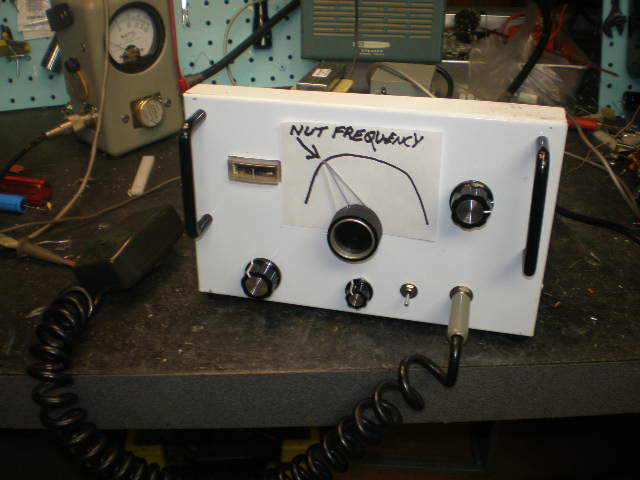 | 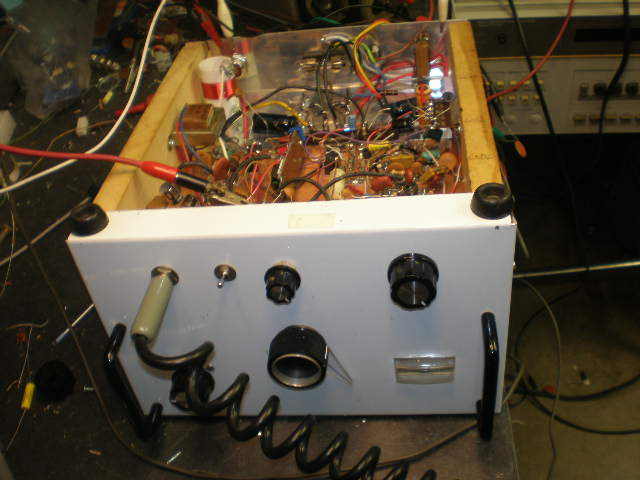 |
| Since I inflicted the Vintage Sideband Net with my first on-air test of
my homebrew 5-tube DSB transceiver today, I thought you guys might like
to see what it looks like. |
|